

Back to All Insights
Insight
Why we turn down AI projects we could win
Taking on work you can't deliver well is bad for everyone. A candid look at why selective engagement produces better outcomes.
Prospectives
July 3, 2026
.avif)
Saying No is a Strategy
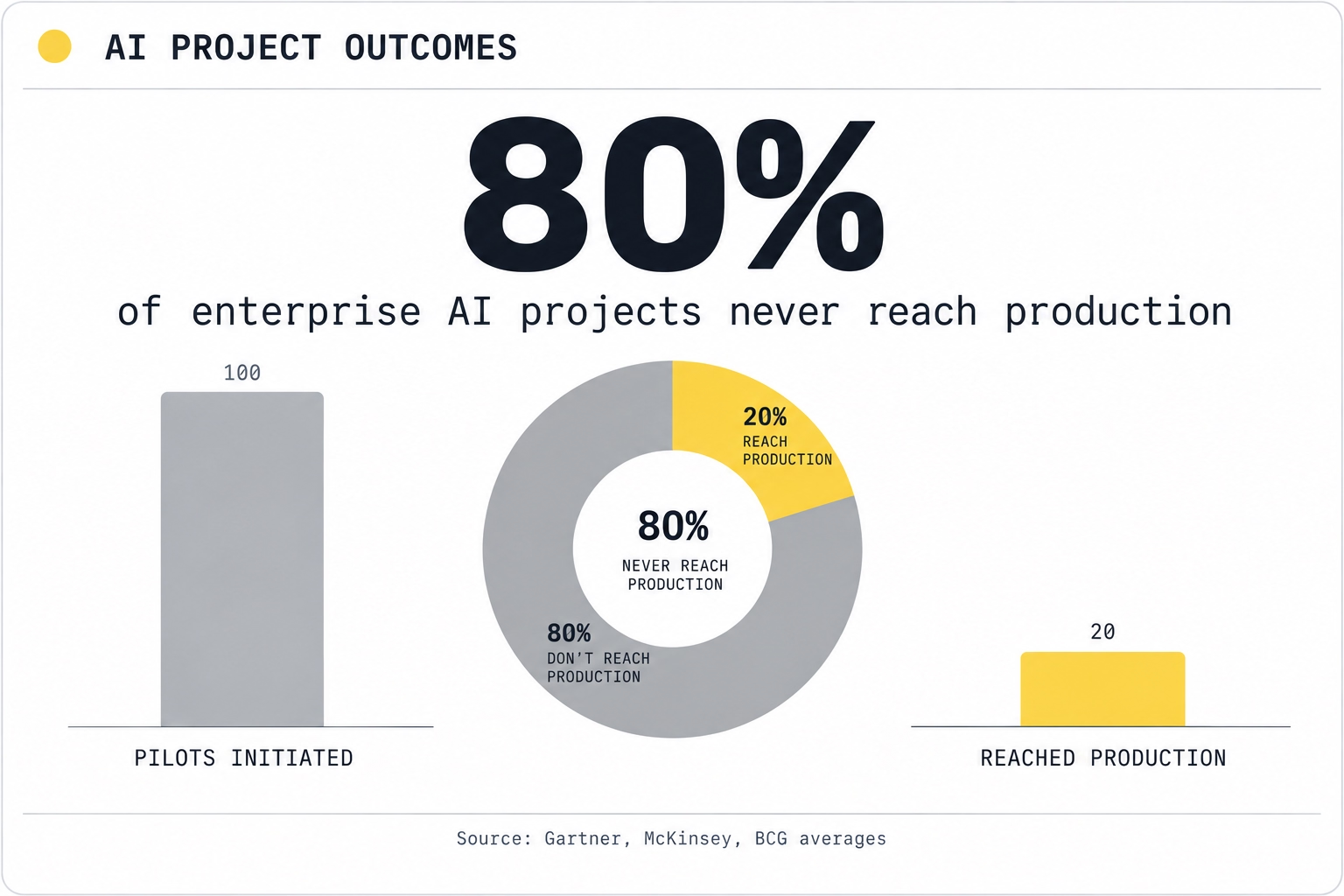
As a boutique AI consultancy, our reputation is tied entirely to our success rate. We cannot afford failed deployments. Over time, we've developed a strict criteria for the projects we accept.
Red Flags We Look For
We typically turn down engagements when we see one of these three red flags during the discovery phase:
- The "Magic Wand" Expectation: If leadership views AI as a magical solution to deep-rooted operational or cultural problems, the project will fail. AI optimizes processes; it doesn't fix broken business models.
- No Executive Champion: AI initiatives cross departmental boundaries. They require data from IT, domain knowledge from Operations, and budget from Finance. Without a C-level champion forcing alignment, these projects die in committee.
- "We Need AI" as the Goal: The goal must be to solve a specific business problem (e.g., reduce churn by 10%, automate 40% of tier-1 support). If the goal is simply to "use LLMs," the project lacks direction and measurable ROI.
Turning down revenue is painful in the short term, but taking on doomed projects is fatal in the long term.
.jpg)

.avif)