


5 MLOps mistakes that kill production models in the first 90 days
The 90-Day Cliff for AI Models
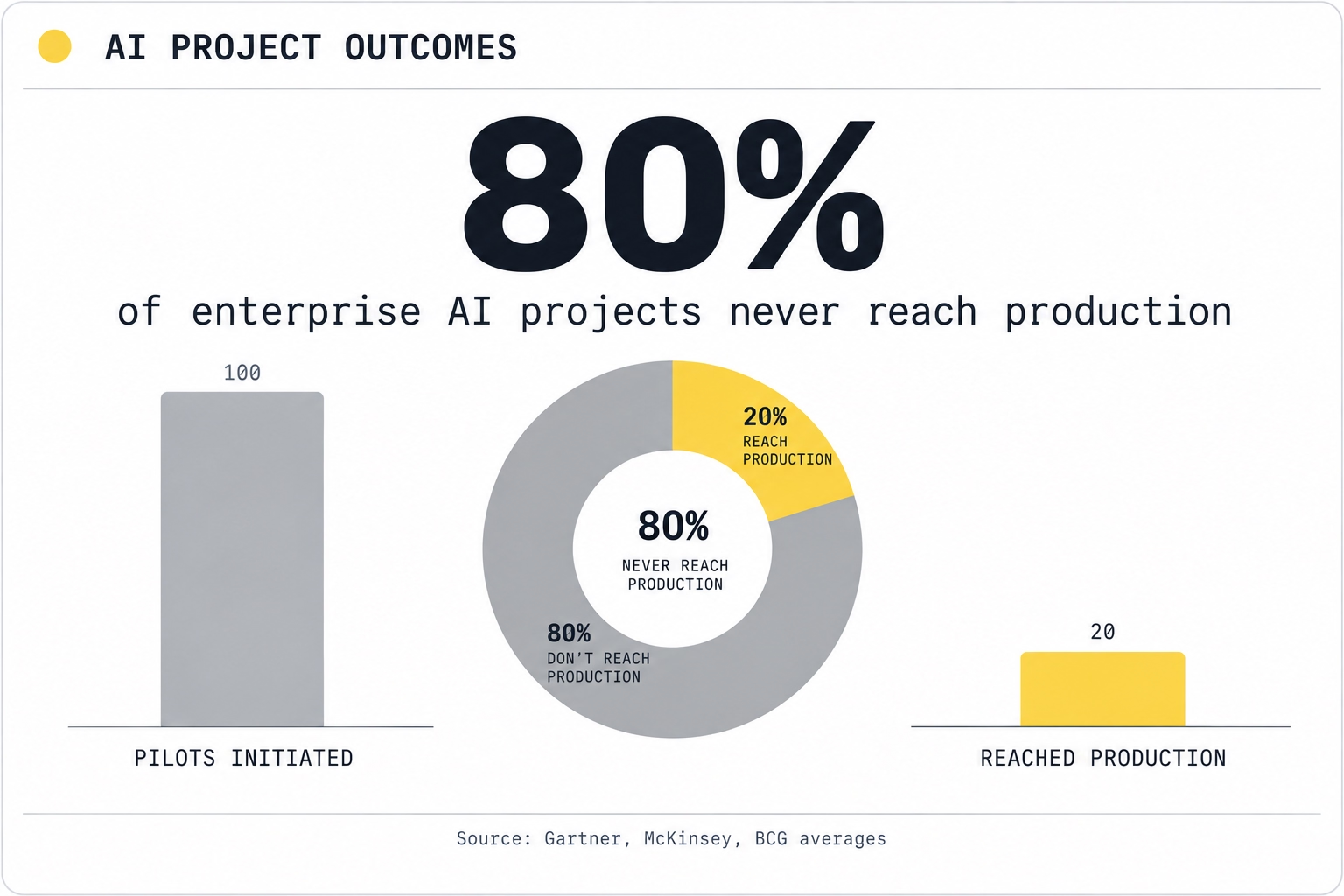
Getting a machine learning model into production is a significant achievement. Keeping it alive and delivering business value after 90 days is an entirely different discipline. We consistently see models suffer silent failures, degradation, and eventual abandonment because teams neglect the fundamental principles of MLOps. Here are the five mistakes that kill models quickly.
1. Missing Baseline Benchmarks
You cannot monitor degradation if you don't know what "good" looks like. Teams often deploy models without establishing clear, quantitative baseline metrics during the validation phase. Without these benchmarks, it is impossible to mathematically prove whether the model is improving or degrading in production.
2. No Drift Detection
The real world changes; models do not. Data drift (changes in the input data distribution) and concept drift (changes in the relationship between inputs and outputs) will inevitably degrade performance. Failing to implement automated drift detection means your model will slowly become inaccurate without anyone noticing.
3. Synchronous Inference in Async Workflows
Tying a heavy inference request directly to a synchronous user-facing API is a recipe for timeouts and terrible UX. Unless absolutely necessary, inference should be handled asynchronously via message queues (like Kafka or RabbitMQ) to ensure system resilience under load.
4. No Automated Rollback Plan
When a newly deployed model version misbehaves, the time to recovery should be measured in seconds, not hours. Teams often fail to implement shadow deployments or automated rollback mechanisms, meaning a bad model stays live while engineers frantically try to revert the codebase manually.
5. Zero Stakeholder Visibility
If the business stakeholders cannot see how the model is performing, they will stop trusting it. MLOps isn't just for engineers. You must expose business-centric dashboards that translate model health into business KPIs (like revenue impacted or hours saved) to maintain executive sponsorship.
.avif)

.jpg)
.avif)